
The botanical beginning
One flower. Three red threads.
Before saffron is a spice, a color, or a ritual, it is a flower. Meet Crocus sativus — small in stature, extraordinary in character.
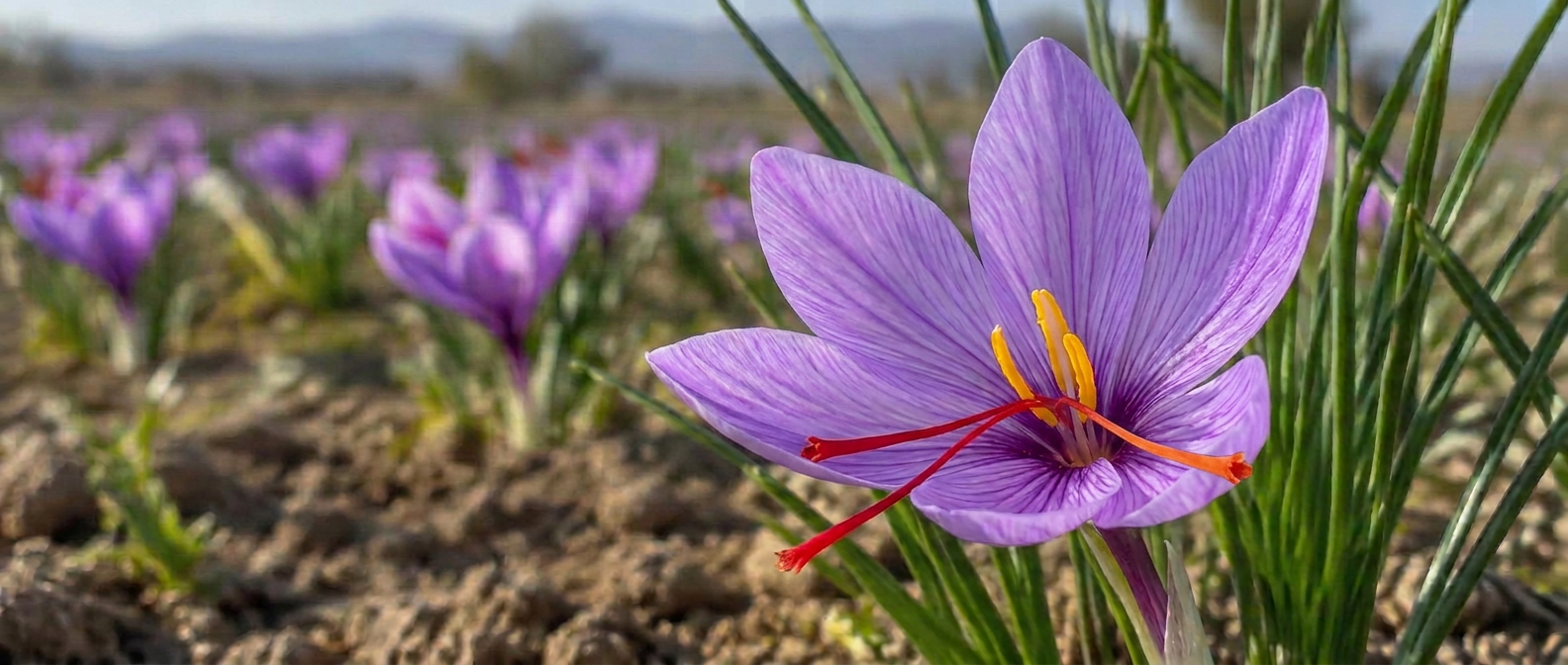
Not the tepals.
The heart of the flower.
Saffron comes from the dried red stigmas of Crocus sativus, a member of the iris family. Each flower produces three crimson stigmas branching from a single style — the threads carefully collected and dried to become the spice.
The lilac-purple flower has six petal-like segments called tepals: three outer sepals and three inner petals that look alike. Neither these tepals nor the golden-yellow anthers are the saffron threads found in the kitchen.
Plant profile · Royal Horticultural Society ↗A season of its own.
Unlike many familiar spring crocuses, the saffron crocus flowers in autumn. Narrow, grass-like leaves and goblet-shaped blooms emerge from an underground corm.
It favors full sun and well-drained soil. Waterlogged conditions can damage the corms, so drainage and local growing conditions matter.
Growing guidance · RHS ↗01 / Cultivation
Grown from corms, not seed.
Crocus sativus is a sterile triploid cultivated plant. Growers propagate it through corms, continuing a relationship between people and plant that stretches back through history.
Botanical record · Kew Science ↗02 / Harvest
Delicate work, thread by thread.
The flowers are picked and the red stigmas separated, then dried. Because each flower offers only three stigmas, producing saffron requires many flowers and painstaking handwork.
That care is part of why saffron is so valued — and why knowing the difference between the plant, the spice, and a standardized extract is important.
A note for curious gardeners.
Do not eat an unidentified crocus or any ornamental plant. Plants commonly called “autumn crocus,” including Colchicum, can be highly poisonous. Only use correctly identified culinary saffron from a trustworthy supplier.
The next chapter is yours