
A thread through time
Small threads. Stories that span the world.
Saffron’s story belongs to more than one place. It appears in ancient art, family kitchens, and the landscapes that people have cultivated for generations.
The Aegean / Bronze Age
A flower on the wall.
At Akrotiri on the Greek island of Santorini, Bronze Age frescoes depict figures gathering crocuses. The “Saffron Gatherers” paintings are a striking reminder of how long these flowers have held people’s attention.
Their precise ritual meaning is debated. The images are evidence of cultural significance, not proof of any modern medical claim.
Explore the Akrotiri frescoes ↗Persia / The family table
Gold, shared by the spoonful.
In Persian cooking, saffron brings color and fragrance to rice, sweets, and drinks. Sholeh zard, a saffron rice pudding often scented with rosewater, is one delicious example of a spice becoming part of a shared ritual.
A bowl can carry more than a flavor: the memory of a kitchen, a celebration, and the people who made it.
Saffron in Iranian culture · Encyclopaedia Iranica ↗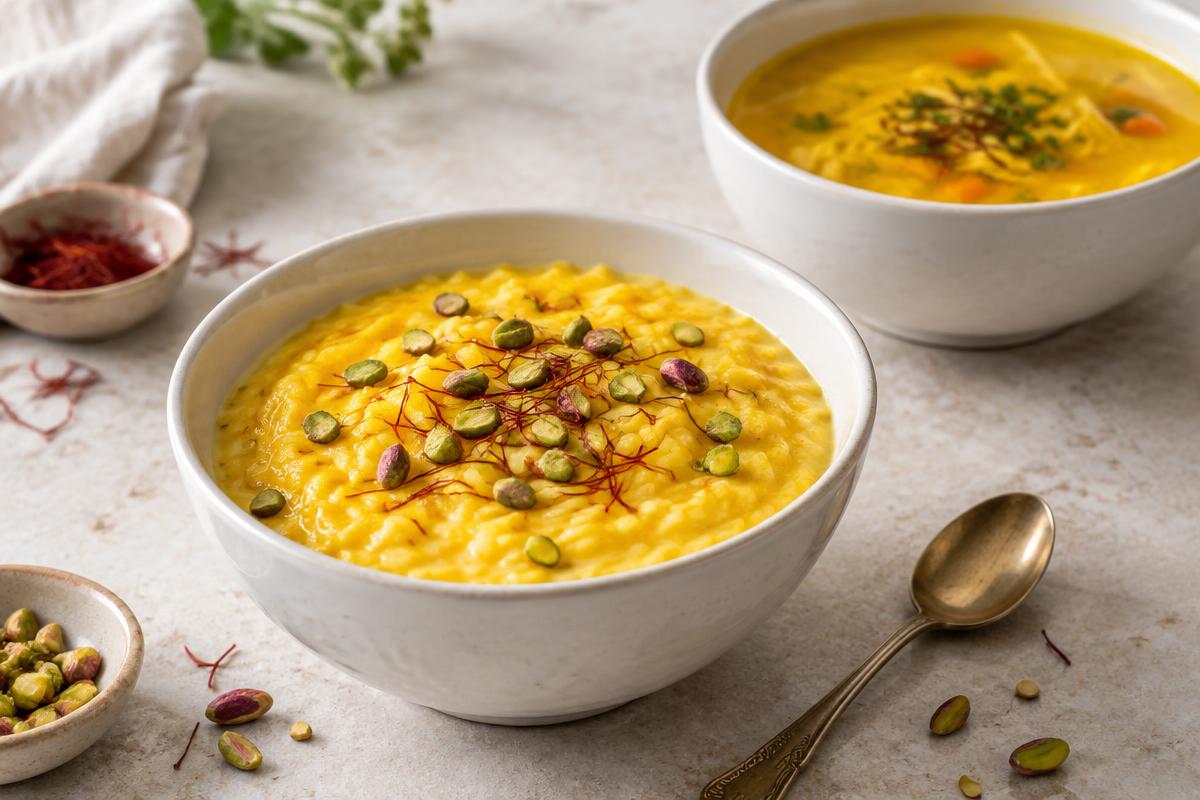
Kashmir / A sense of place
The fields around Pampore.
Kashmir has a distinctive saffron-growing tradition, with Pampore especially associated with the crop. Kashmir Saffron received geographical indication recognition in India in 2020, acknowledging the connection between the product and its place of origin.
Like wine regions or regional foods, a geographical indication tells a story about origin. It is not a claim that every product bearing saffron shares that origin — or that Joviva sources from a particular region.
Kashmir Saffron · Indian GI registry ↗Tradition is a beginning, not a shortcut.
We’re inspired by saffron’s cultural richness. We also keep tradition and scientific evidence distinct: a centuries-old story can spark curiosity, while modern claims still need modern research.
The next chapter is yours